

 Image 1 of 3
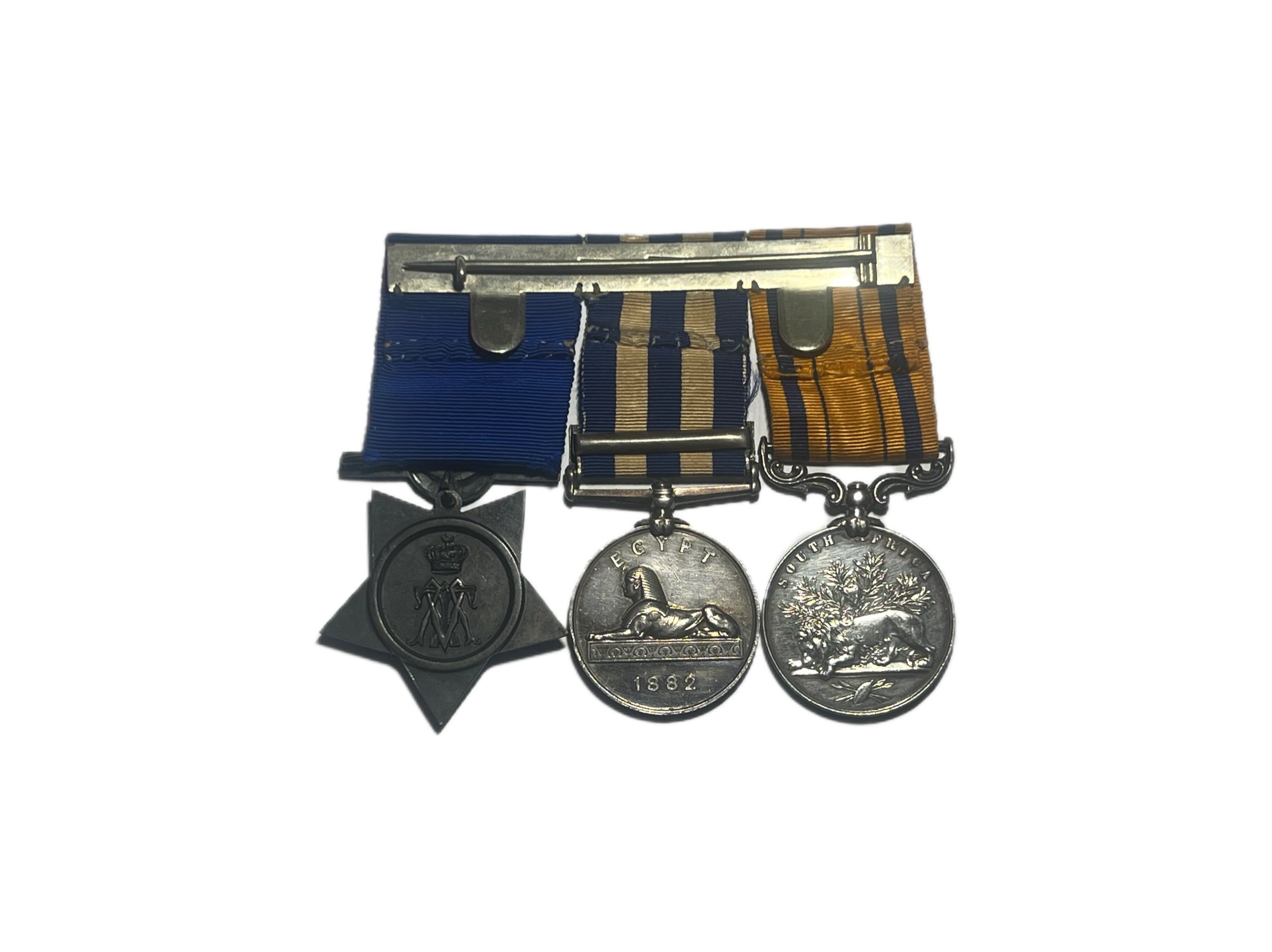 Image 2 of 3
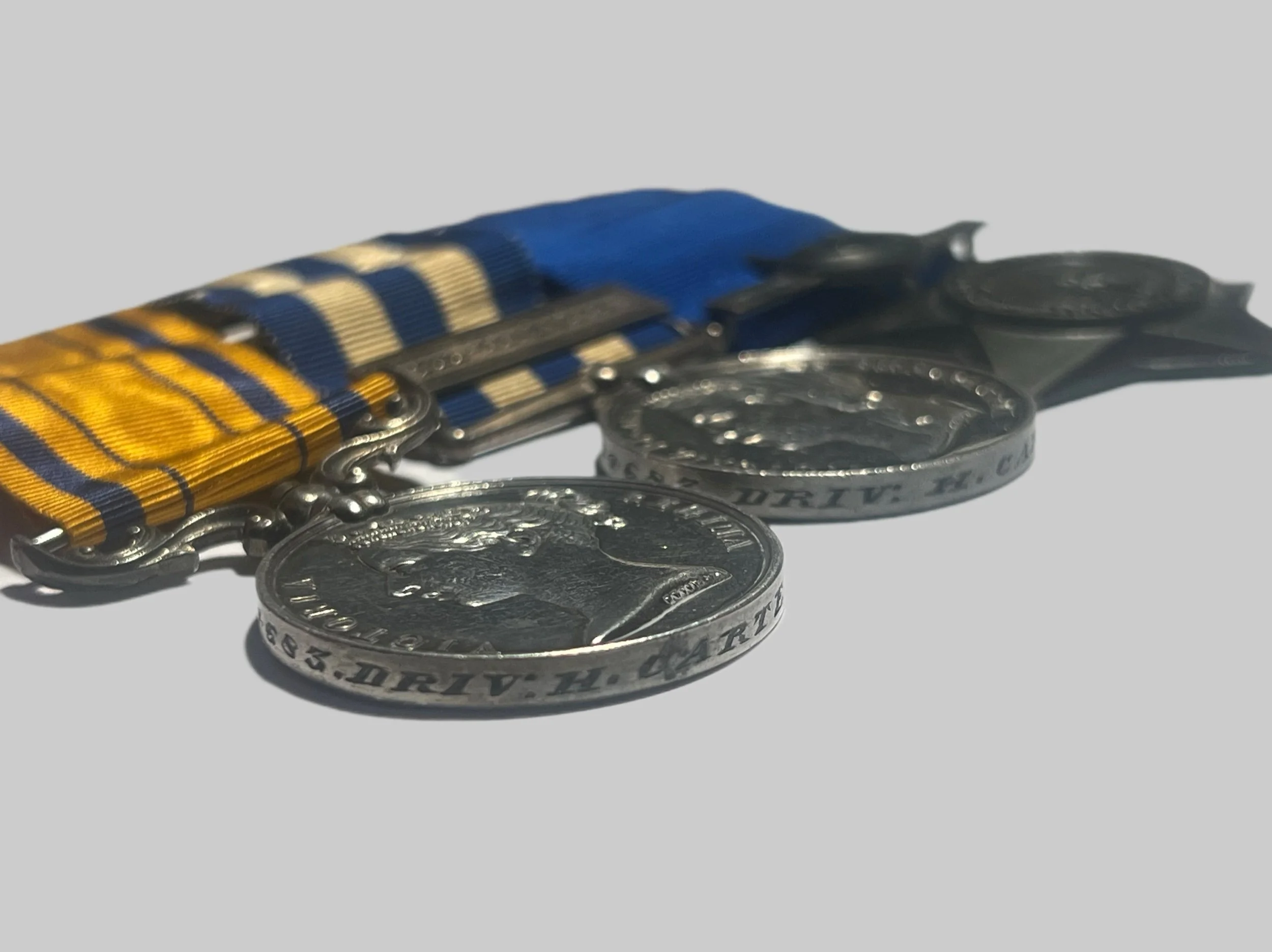 Image 3 of 3
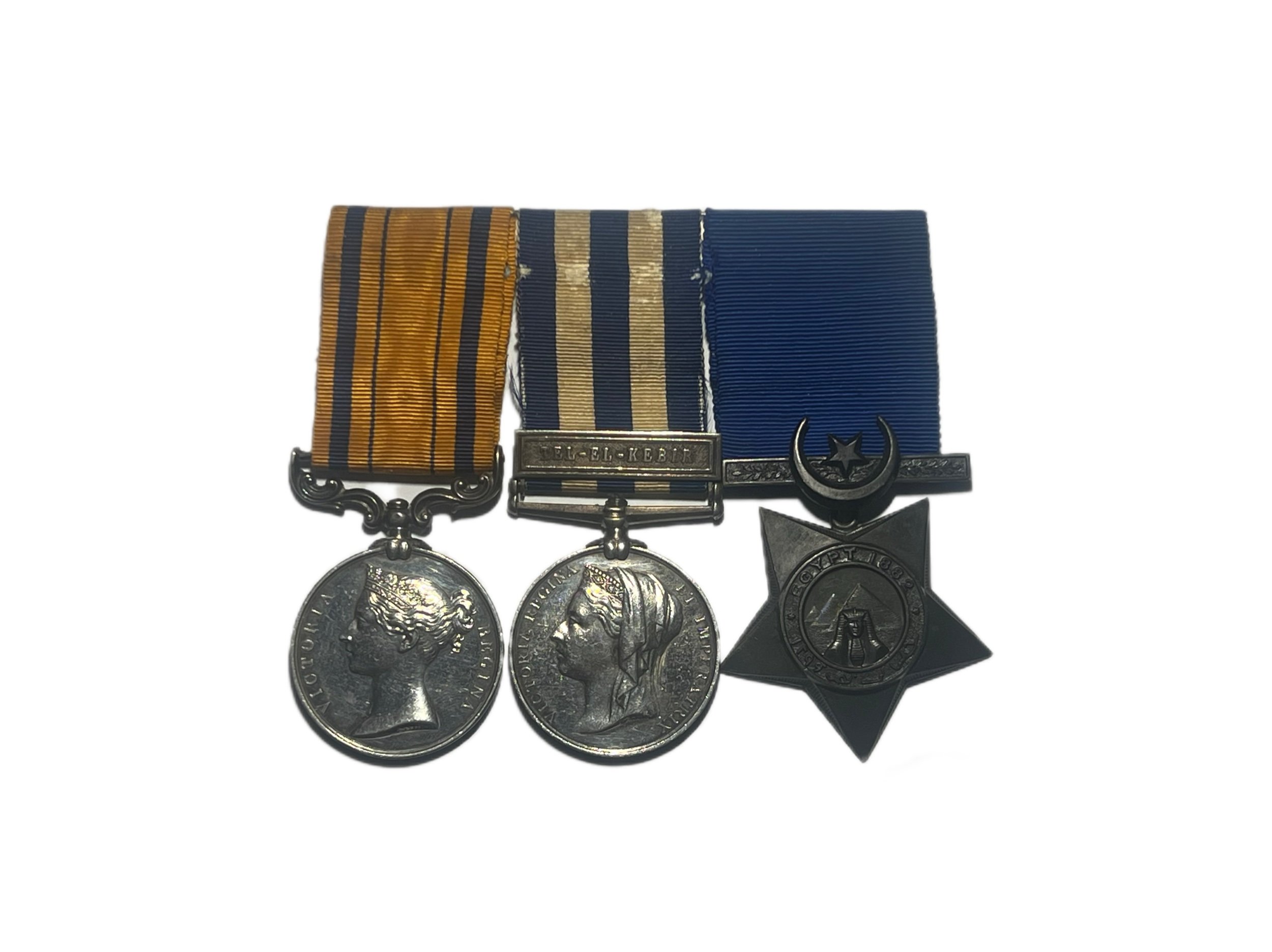
This three-medal campaign group was earned by Driver Henry Carter of the Royal Engineers for his active service across two major late-Victorian colonial wars, during which his primary duty was managing the horse and mule teams that hauled heavy bridging pontoons, field telegraph wagons, and entrenching tools to the front lines. He first earned the South Africa Medal (1877–1879) without a clasp during the 1879 Anglo-Zulu War, a conflict sparked by British imperial expansion against King Cetshwayo's Zulu Kingdom; the absence of a dated clasp indicates he served in the mobilized border zones of Natal, guarding vital supply lines and transporting engineering stores without crossing the Tugela River into active Zululand combat. Three years later, Carter deployed to Egypt during the 1882 Anglo-Egyptian War, a British expedition sent to crush Ahmed Urabi's nationalist uprising and secure the Suez Canal, earning the Egypt Medal with the "TEL-EL-KEBIR" clasp alongside the bronze Khedive's Star for taking part in the decisive dawn assault on Urabi's entrenched lines on 13 September 1882 following a silent nine-mile night march across the desert. As an award to a Royal Engineer Driver, this group is moderately scarce and prized by specialist collectors, as the Royal Engineers deployed in far smaller numbers than infantry regiments and only around 5,610 no-clasp South Africa Medals were issued in total, making a confirmed two-campaign survivor a desirable historical set. Visually, the trio appears to be in Very Fine to Good Very Fine collector condition, with both silver medals retaining sharp portrait relief, crisp edge naming, and an attractive, unpolished dark-grey patina with only light contact marks from uniform wear, while the Khedive's Star preserves much of its original dark bronzed finish and the entire group sits neatly mounted on clean replacement silk ribbons along with a new replacement bar.
This three-medal campaign group was earned by Driver Henry Carter of the Royal Engineers for his active service across two major late-Victorian colonial wars, during which his primary duty was managing the horse and mule teams that hauled heavy bridging pontoons, field telegraph wagons, and entrenching tools to the front lines. He first earned the South Africa Medal (1877–1879) without a clasp during the 1879 Anglo-Zulu War, a conflict sparked by British imperial expansion against King Cetshwayo's Zulu Kingdom; the absence of a dated clasp indicates he served in the mobilized border zones of Natal, guarding vital supply lines and transporting engineering stores without crossing the Tugela River into active Zululand combat. Three years later, Carter deployed to Egypt during the 1882 Anglo-Egyptian War, a British expedition sent to crush Ahmed Urabi's nationalist uprising and secure the Suez Canal, earning the Egypt Medal with the "TEL-EL-KEBIR" clasp alongside the bronze Khedive's Star for taking part in the decisive dawn assault on Urabi's entrenched lines on 13 September 1882 following a silent nine-mile night march across the desert. As an award to a Royal Engineer Driver, this group is moderately scarce and prized by specialist collectors, as the Royal Engineers deployed in far smaller numbers than infantry regiments and only around 5,610 no-clasp South Africa Medals were issued in total, making a confirmed two-campaign survivor a desirable historical set. Visually, the trio appears to be in Very Fine to Good Very Fine collector condition, with both silver medals retaining sharp portrait relief, crisp edge naming, and an attractive, unpolished dark-grey patina with only light contact marks from uniform wear, while the Khedive's Star preserves much of its original dark bronzed finish and the entire group sits neatly mounted on clean replacement silk ribbons along with a new replacement bar.